When you build or renovate, most of the attention goes to the finishes: floors, counters, light fixtures. Those matter. But almost every problem we get called to fix in a finished house traces back to the framing behind the walls.
What bad framing looks like later
- Doors that stick or will not latch
- Cracks at the corners of doors and windows
- Floors that squeak, bounce or slope
- Wavy walls that make trim and cabinets hard to install
- Nail pops and drywall cracks along the ceiling
- Roof lines that sag over time
What good framing looks like
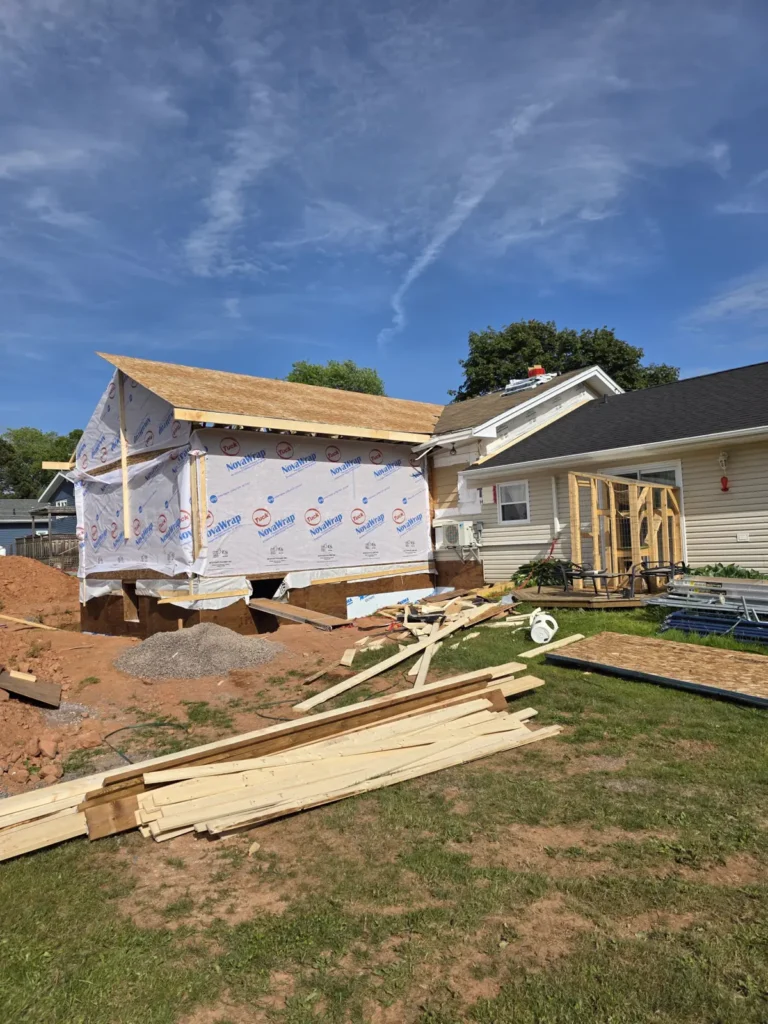
- Square, level and plumb walls, checked as they go up
- Straight lumber, with crowned boards placed correctly
- Proper headers over doors and windows sized for the load
- Load paths that carry weight straight down to the foundation
- Floors glued and screwed to reduce squeaks
- Correct fastening at roof and wall connections for wind
Why it matters more on the Island
Strong winds, heavy wet snow and big temperature swings put real stress on a house. Proper bracing, sheathing and connections are what keep everything tight. A well-framed house is also easier to insulate and air-seal, which saves on heating every winter.
Framing makes every other trade better
When the frame is straight, drywall goes up flat, cabinets hang level, trim joints close tight and tile lines up. The finishing trades spend less time fixing problems, which saves money too.
Building or adding on?
Framing is where our owner started his career, and it is still where we put the most care. Ask us about your project.
Get a Free EstimateCall 782 377-3091More on our framing service page and our custom home building service.
Frequently asked questions
What is the difference between rough and finish carpentry?
Rough carpentry is the structure: floors, walls and roofs. Finish carpentry is what you see: trim, doors, stairs and built-ins. We do both.
Do you frame with trusses or rafters?
Both. Trusses are common for simple roofs. Rafters suit vaulted ceilings, attic rooms and complex roof shapes.
Can squeaky floors be fixed?
Usually. Squeaks often come from loose subfloor. They can be fixed from below in a basement or from above during a flooring job.